

Winter Storage Checklist: Powersports Vehicles with an AGM Battery
Posted by G. Nicholas on

Winter Storage Checklist for Powersports Vehicles with an AGM Battery: The Professional Guide
Phase 1: Vehicle Surface & Chassis Prep
Before the battery is even touched, the vehicle—especially your bike—must be physically stabilized to prevent corrosion and pest intrusion.
-
Deep Clean & Dry: Wash the entire vehicle to remove mud, salt, and organic debris. Crucial: Use a leaf blower or compressed air to remove water from electrical connectors, spark plug wells, and deep crevices. Moisture trapped under a cover is the #1 cause of harness corrosion.
-
Chassis Lubrication: Apply a high-quality silicone spray or WD-40 to exposed metal surfaces (A-arms, frame welds) to create a moisture barrier. Grease all Zerk fittings to displace any water trapped inside the pivot points.
-
Pest Prevention: Rodents love the soy-based wiring insulation used in modern powersports.
-
Block Intake/Exhaust: Stuff a clean rag or “Muffler Plug” into the exhaust and air intake.
-
Scent Deterrents: Place dryer sheets or peppermint oil-soaked cotton balls under the seat and near the wiring loom.
-
Lifting the Vehicle: Use rear stands to elevate your bike. This makes it easier to work on the wheels, chain, and other components during winter maintenance.
Phase 2: Fuel System & Engine Stabilization
Modern ethanol-blended fuels are hygroscopic (they pull moisture from the air), leading to phase separation and varnish.
-
Stabilize the Fuel: Add a high-quality stabilizer (e.g., Seafoam or Sta-Bil) to a near-empty tank.
-
The "Circulation Run": Fill the tank to 95% with fresh, ethanol-free fuel (if available). Run the engine for 10–15 minutes to ensure the stabilized fuel has reached the fuel injectors or carburetor bowls.
-
Fresh Oil: Change the oil and filter. Used oil contains combustion byproducts and acids that can etch engine bearings if left to sit for months.
Phase 3: Tire & Suspension Management
Preventing "flat-spotting" and seal drying is key for a smooth first ride in the spring.
-
Adjust PSI: Inflate tires to roughly 2–3 PSI above normal operating pressure. This helps the sidewall maintain its round shape as the rubber hardens in the cold.
-
Relieve Suspension Stress: Ideally, use a jack or blocks to lift the vehicle so the tires are off the ground. This prevents flat spots and takes the "set" out of the suspension springs.
-
Seal Care: Spray a light coat of silicone lubricant on the shock shafts to keep the rubber seals from drying out and cracking.
Storage Safety Precautions
When it comes to winter storage, taking the right safety precautions with your powersports battery is just as important as any other step in your maintenance routine. Proper storage not only protects your investment but also ensures your battery is ready to deliver optimal performance when riding season returns.
Keep It Safe & Dry:Always store your battery in a cool, dry place—never in areas exposed to freezing temperatures or extreme cold. Freezing can cause the electrolyte inside the battery to expand, leading to permanent damage or even a cracked battery case. Avoid storing your battery near open flames, sparks, or flammable materials, as batteries can emit hydrogen gas during storage, which poses a fire risk if not properly ventilated.
Prevent Corrosion & Buildup:Corrosion buildup on battery terminals is a common culprit behind poor battery performance and shortened battery life. Before storing, make sure the battery terminals are clean and free from any corrosion. A simple mixture of baking soda and water is effective for regular cleaning and helps prevent corrosion from forming during long periods of storage. After cleaning, ensure the terminals are dry and consider applying a protective coating to further prevent oxidation.
Secure & Monitor:Store your battery on a stable surface where it won’t be subject to vibration or physical stress, which can damage internal components. It’s also a good practice to keep the battery off concrete floors—while modern batteries are less susceptible to voltage drops from concrete, a wooden shelf or bench in a dry place is ideal for maintaining battery health.
Maintain Charge & Prevent Deep Discharge:One of the most critical aspects of winter storage is keeping your battery charged. Allowing your battery to deeply discharge over the winter months can cause irreversible damage, especially in AGM and lithium ion batteries. Using a battery maintainer or battery tender is the best way to keep your battery charged without overcharging. These devices monitor voltage and automatically switch to float mode, ensuring your battery stays at the right charge level for long-term storage.
Check Levels & Follow Manufacturer Guidance:For batteries with accessible electrolyte levels, check and top up with distilled water if needed before storage. AGM and lithium ion batteries are typically maintenance free, but it’s still wise to check voltage periodically. Always consult your owner’s manual or manufacturer’s instructions for any battery-specific storage recommendations, as different battery types may have unique requirements.
Regular Inspections:Throughout the winter, it’s a good idea to periodically inspect your battery for any signs of corrosion, leaks, or voltage drops. Regular cleaning and maintenance can prevent unnecessary damage and extend your battery’s lifespan, ensuring enough power for your starter motor and accessories like heated grips when it’s time to ride again.
By following these storage safety precautions—keeping your battery clean, charged, and protected from extreme cold—you’ll prevent deep discharge, corrosion, and permanent damage. Proper storage and regular maintenance are the keys to ensuring your battery’s ability to deliver peak condition and long service life, season after season.
Phase 4: Masterclass in AGM Battery Management
AGM (Absorbed Glass Mat) batteries use glass mat technology, making them sealed, maintenance-free, and highly durable. This design provides superior vibration resistance and allows AGM batteries to perform well in extreme temperatures compared to traditional lead acid batteries. AGM batteries also have a longer lifespan, typically lasting 3-5 years, whereas flooded lead-acid batteries may not last as long under similar conditions.
Cold Cranking Amps (CCA) is a key measurement of a battery's ability to start an engine in cold conditions, and AGM batteries generally offer higher CCA ratings, making them ideal for winter storage and use. To prevent deep discharge and sulfation, it is important to keep AGM batteries near full charge. Regular battery maintenance is crucial for ensuring optimal performance and extending your battery's lifespan. If your current battery is not holding a charge or is past its expected lifespan, consider installing a new battery to maintain reliable performance.
AGM batteries are superior in vibration resistance but are chemically sensitive. Unlike flooded batteries, they have a very low self-discharge rate, but they are easily damaged by “dumb” chargers that “cook” the electrolyte.
1. Terminal Inspection & Cleaning
-
Disconnect: Remove the Negative (-) cable first, then the Positive (+).
-
Neutralize Acid: Even AGM batteries can develop “creep” corrosion. Corroded terminals can impede electrical flow and cause starting issues, so regular inspection for corroded terminals is important. Clean terminals with a mixture of baking soda and water.
-
Protect: Apply a thin layer of dielectric grease to the terminals. This prevents oxidation without hindering the electrical connection.
2. The AGM Charging Protocol
-
Pre-Storage Top-Off: Never store an AGM battery in a partially discharged state. Use a smart charger to bring it to 12.8V – 13.0V before the temperature drops. Using a smart charger is recommended for battery maintenance during winter storage, as it helps ensure the battery remains in optimal condition.
-
Maintainer vs. Trickle Charger: NEVER use a traditional “dumb” trickle charger on an AGM battery. These chargers provide a constant current that can lead to “gassing” in a sealed AGM, causing the safety valves to pop and permanently drying out the internal mats. If you are not using a maintainer, check the battery voltage monthly; recharge the battery if it drops below 12.4V.
-
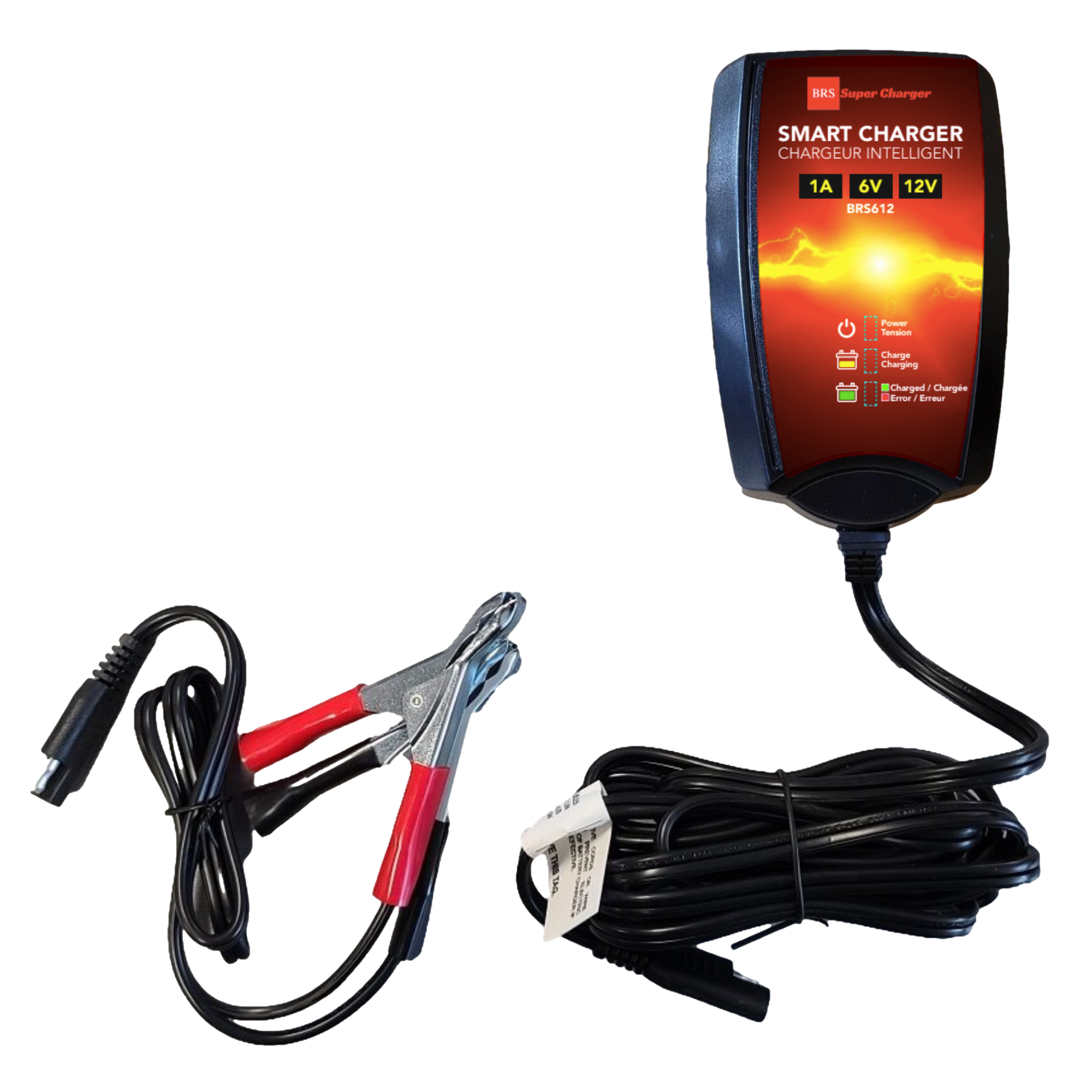
Use a Microprocessor-Controlled Tender: You must use a “Smart Maintainer” (like those sold at BRS Battery) that features an AGM-specific mode. This mode uses a multi-stage charging profile (Bulk, Absorption, and Float) to keep the battery healthy without overcharging. Keeping an AGM battery charged is essential to prevent sulfation during winter storage, which can significantly reduce battery life
-
For powersports vehicles we recommend the BRS Super Charger. The BRS612 Super Charger is a smart charger, maintainer, and battery rejuvenator. This trickle charger is perfect for long term storage and you can keep your vehicle connected to the maintainer during the entire time it's in storage.
3. Storage Location
-
The Concrete Myth: Modern plastic-cased batteries do not "drain into concrete." However, storing a battery on a cold floor does create a temperature gradient that can lead to internal stratification.
-
Pro Tip: Store the battery in a cool, dry place on a wooden shelf. While AGMs handle cold well, they perform best when kept above freezing. If the vehicle is stored in an unheated shed, it is often better to remove the battery and keep it in a garage or basement on a maintainer.
Phase 5: Final Wrap
-
Breathable Cover: Use a fabric cover, not a plastic tarp. Plastic tarps trap condensation, which leads to "white rust" on aluminum engine components and can short out sensitive AGM battery maintainers.
Quick Specs Reference for AGM Batteries
|
Status |
Voltage (Resting) |
Action Required |
|---|---|---|
|
Fully Charged |
12.8V - 13.0V+ |
Ready for storage |
|
Needs Charge |
12.4V - 12.6V |
Charge immediately before storage |
|
Danger Zone |
Below 12.0V |
Potential for permanent sulfation; recovery mode needed |
Note: A fully charged AGM battery should have a voltage around 12.6 volts or higher. When preparing for winter storage, also check your battery's cold cranking amps (CCA)—a higher CCA rating means better starting performance in cold weather and increased reliability in freezing conditions. We recommend using a smart charger like the BRS612 Super Charger while your vehicle is in storage.